Searching for pure honey in India can quickly become confusing.
One jar says “raw.” Another says “organic.” A third promises “100% pure,” while social media is filled with water tests, flame tests and other supposedly easy ways to identify genuine honey.
The problem is that honey naturally varies in colour, taste, thickness and crystallisation depending on its floral source, temperature and storage conditions.
So instead of judging honey from one visual characteristic or a viral home test, buyers should look at several practical factors together.
Here is what to check before buying honey online in India.
What Does “Pure Honey” Actually Mean?
When people search for pure honey, they generally want honey that has not been unnecessarily mixed with other sweeteners or additives.
However, appearance alone cannot tell you whether a product meets that expectation.
Honey from different floral and geographical sources can naturally have different colours, aromas, flavours, textures and crystallisation patterns.
This means a dark honey is not automatically purer than a light honey, and thick honey is not automatically better than runny honey.
A more reliable buying decision starts with the label, source information, product transparency and applicable testing or compliance information.
1. Start With the Ingredient Label
The first thing to examine is the ingredient declaration.
For a plain honey product, understand exactly what the manufacturer says the jar contains.
Do not rely only on large front-label phrases such as pure, natural, premium, farm fresh, healthy or traditional.
These words may sound reassuring, but the complete label gives you much more useful information.
- Net quantity
- Manufacturer or marketer
- Batch information
- Manufacturing or packing information
- Best-before information
- Storage instructions
- Applicable regulatory details
The more transparent the packaging, the easier it becomes to compare products.
2. Understand Where the Honey Comes From
The source of honey can strongly influence its flavour and character.
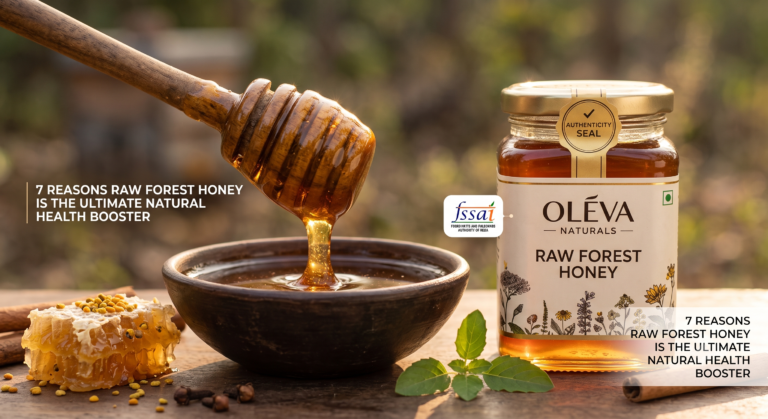
Forest Honey
Forest honey is associated with bees foraging among diverse vegetation in forest environments.
It may have a richer aroma and stronger flavour than some lighter honey varieties.
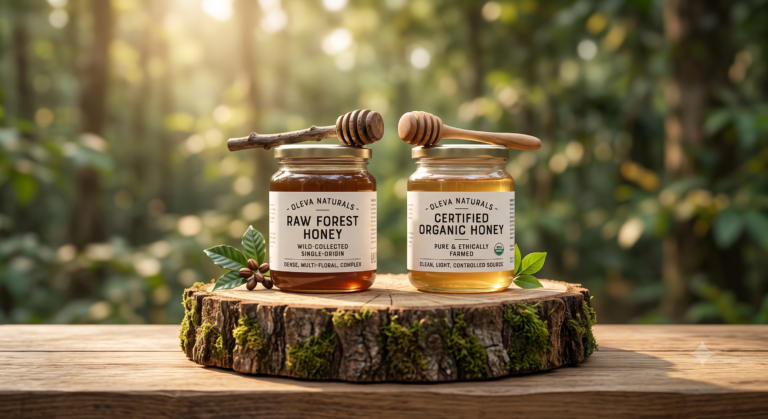
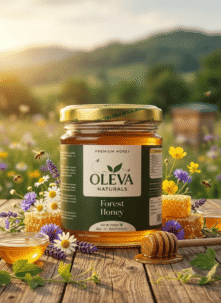
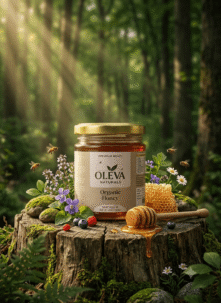
If you enjoy a bold-tasting honey, explore Oleva Naturals Forest Raw Honey.
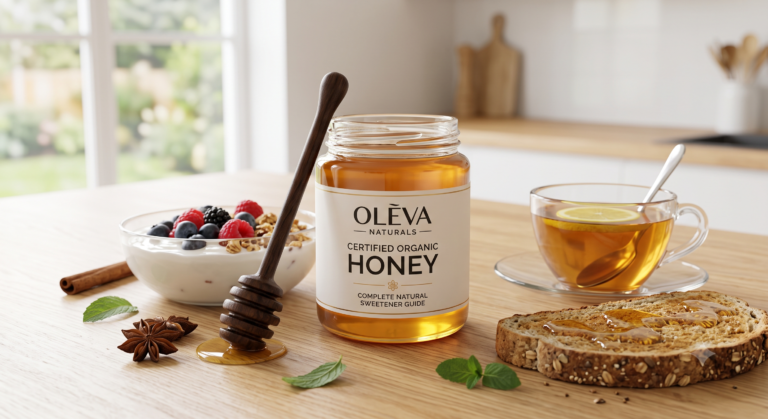
Organic Honey
Organic honey relates to applicable organic production requirements.
If organic sourcing is important to you, check the certification and product information for the particular honey you are considering.
Explore Oleva Naturals Organic Honey.
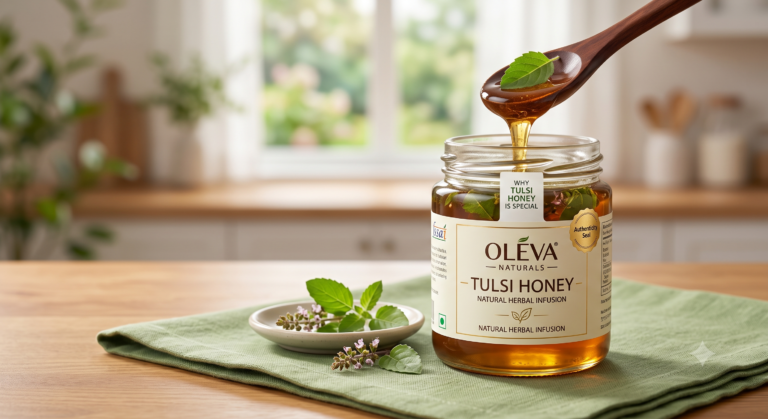
Tulsi Honey
Tulsi honey combines the sweetness of honey with a distinctive herbal tulsi character.
It can be particularly suitable for tea, breakfast foods and people who prefer an herbal flavour.
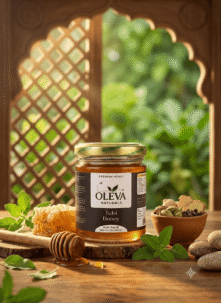
Explore Oleva Naturals Tulsi Infused Honey.
There is no single flavour profile that automatically makes one type of honey “purer” than another.
3. Do Not Judge Purity From Colour
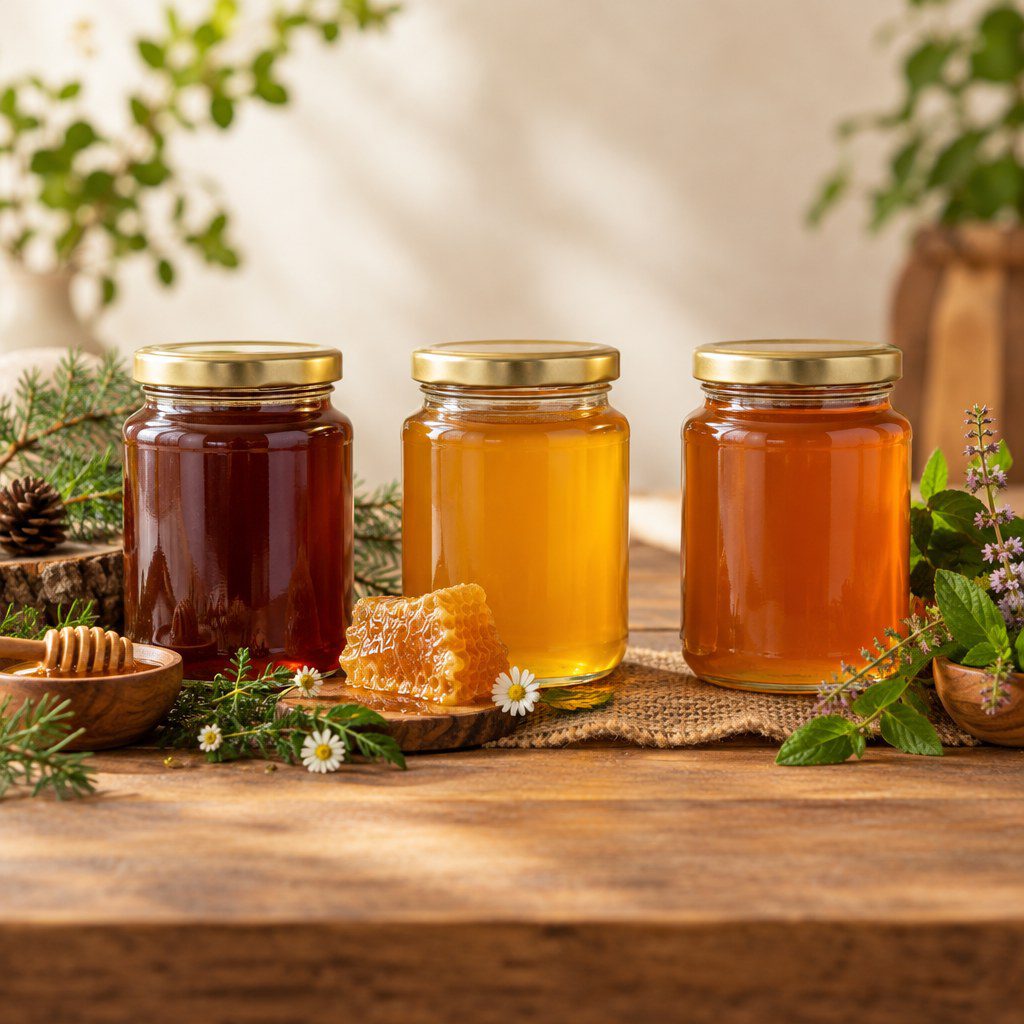
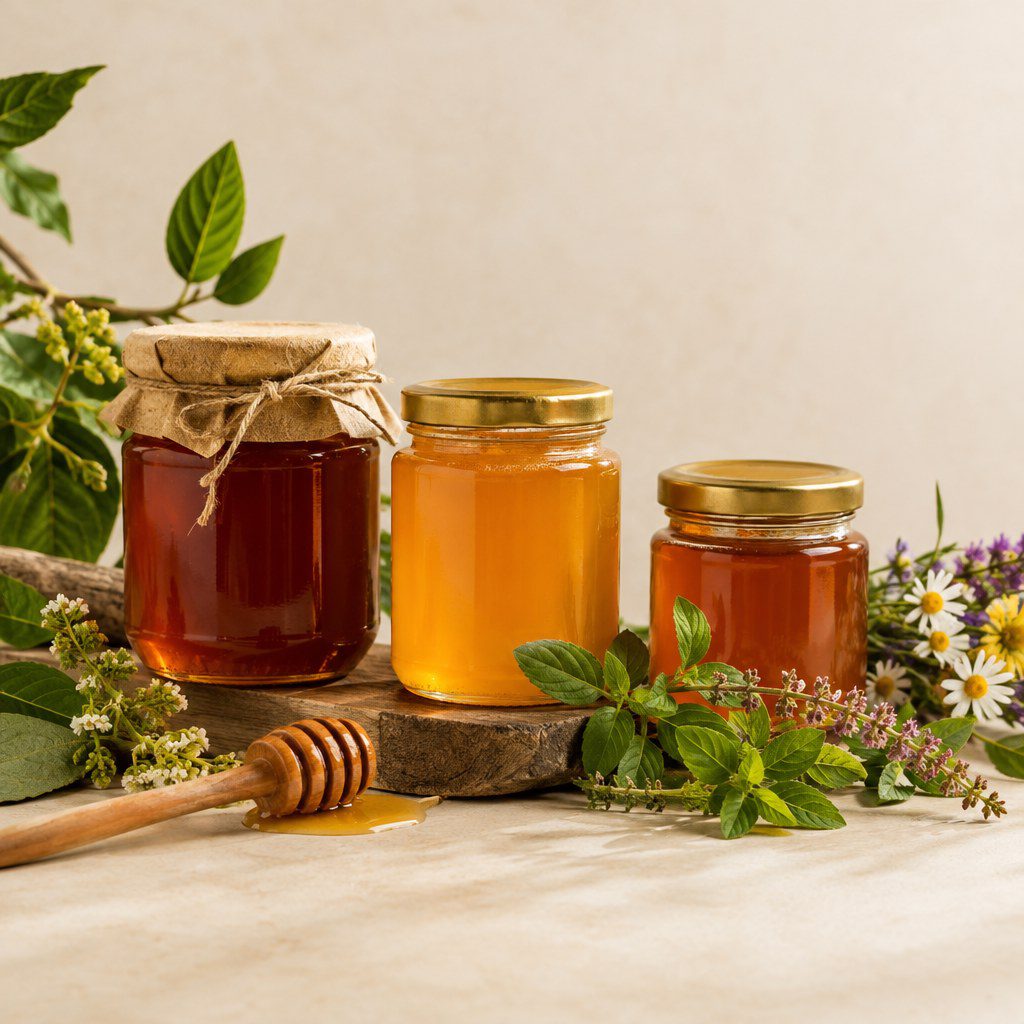
Honey can range from pale gold to deep amber and darker shades.
Its colour can be influenced by the flowers and vegetation visited by the bees.
Dark honey does not automatically mean pure honey, and light honey does not automatically mean processed or fake honey.
Colour is useful for understanding flavour expectations, but it should not be your primary purity test.
4. Do Not Judge Honey Only by Thickness
Another common misconception is that pure honey must always be extremely thick.
- Temperature
- Moisture
- Floral source
- Storage conditions
- Natural sugar composition
A honey that flows more freely is not automatically adulterated. Likewise, an unusually thick product is not proof of purity.
5. Understand Honey Crystallisation
Seeing crystals inside a honey jar sometimes worries buyers, but honey can crystallise naturally.
Crystallisation happens when some of the naturally occurring sugars in honey form crystals. The speed varies from one honey to another, and temperature and floral source can also influence the process.
Therefore, crystallisation itself does not mean honey has spoiled. It also should not be used as absolute proof that honey is pure.
6. Be Careful With Viral Honey Purity Tests
You may have come across home tests such as dropping honey into water, putting honey on your thumb, testing whether it spreads, trying to burn honey or checking whether ants approach it.
These tests may be entertaining, but they cannot reliably determine whether a honey sample has been adulterated.
Different genuine honeys can behave differently because of their natural composition.
If you want to understand this topic in more detail, read How to Check Pure Honey at Home: 5 Common Tests Explained. The article explains why home tests have limitations and why proper analytical testing is more dependable.
7. Look for Brand Transparency
A good honey brand should make it easier—not harder—for consumers to understand what they are buying.
- Product type
- Source
- Ingredients
- Pack size
- Manufacturer details
- Storage
- Customer support
- Regulatory information
- Realistic product claims
Be cautious when honey is marketed as if it can cure numerous diseases or solve every health problem.
Honey is primarily a food and natural sweetener, not a replacement for medical care.
8. Compare the Product With Your Intended Use
“Best honey” can mean different things depending on why you are buying it.
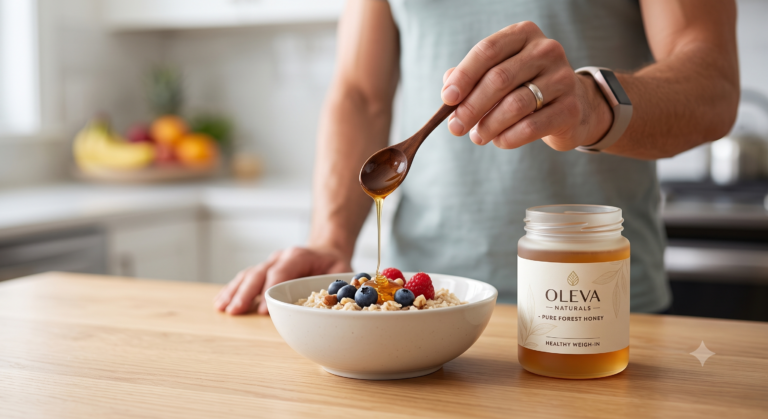
If you want a stronger flavour for breakfast or tea, you may enjoy forest honey. If organic sourcing is an important purchasing criterion, organic honey may be the more relevant category. If you enjoy an herbal flavour, tulsi honey may be a better fit.
Choosing honey according to your actual use is usually more useful than trying to identify one universal winner.
9. Check the Seller Before Buying Honey Online
When purchasing pure honey online in India, also assess the seller.
- A secure website
- Clear product pages
- Contact information
- Shipping information
- Return or refund terms
- Product images
- Pack-size information
- Transparent pricing
Avoid making your decision purely on the lowest price. Quality, sourcing, packaging and brand transparency also matter.
Pure Honey vs Raw Honey: Are They the Same?
Not necessarily.
Pure honey generally refers to the expectation that honey has not been adulterated with unrelated sweeteners or ingredients.
Raw honey generally refers to limited processing.
These terms describe different characteristics. A product can therefore be marketed around more than one characteristic, depending on how it is produced.
Always check the actual product information instead of assuming that one marketing term tells you everything.
Pure Honey vs Organic Honey
These are also different concepts.
Pure relates to product composition.
Organic relates to production standards and certification requirements.
If this distinction matters to your buying decision, read Organic Honey Benefits, Uses & How to Choose Quality Honey.
Which Oleva Naturals Honey Should You Choose?
Forest Raw Honey
Choose this if you prefer a richer, stronger honey flavour.
Organic Honey
Consider this option when organic sourcing is part of your purchasing preference.
Tulsi Infused Honey
Choose this if you enjoy honey with a distinctive herbal tulsi note.
You can also read our detailed Forest Honey vs Organic Honey comparison before deciding.
Final Checklist Before Buying Pure Honey Online
- Have I checked the ingredient information?
- Does the brand clearly explain the type of honey?
- Is the source or product description transparent?
- Am I avoiding conclusions based only on colour or thickness?
- Do I understand that crystallisation can occur naturally?
- Am I ignoring unreliable viral home tests?
- Does the seller provide clear contact and product information?
- Does this particular honey suit how I plan to use it?
If the answers are satisfactory, you are making a much more informed decision than simply choosing the jar with the strongest marketing claim.
Frequently Asked Questions
How can I identify pure honey in India?
Start with the ingredient declaration, manufacturer information, source, packaging and relevant compliance details. Appearance alone cannot reliably establish purity.
Does pure honey crystallise?
It can. Crystallisation is a natural process in many honey varieties.
Is thick honey always pure?
No. Thickness can be affected by floral source, moisture and temperature.
Can I test pure honey with water?
Water-based home tests cannot reliably prove whether honey is pure or adulterated.
Is raw honey the same as pure honey?
Not necessarily. “Raw” generally relates to processing, while “pure” relates more to product composition.
Where can I buy honey online in India?
Oleva Naturals offers Forest Raw Honey, Organic Honey and Tulsi Infused Honey directly through its online store.