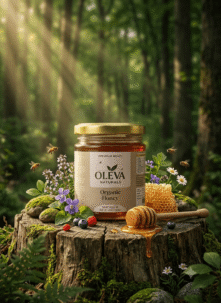
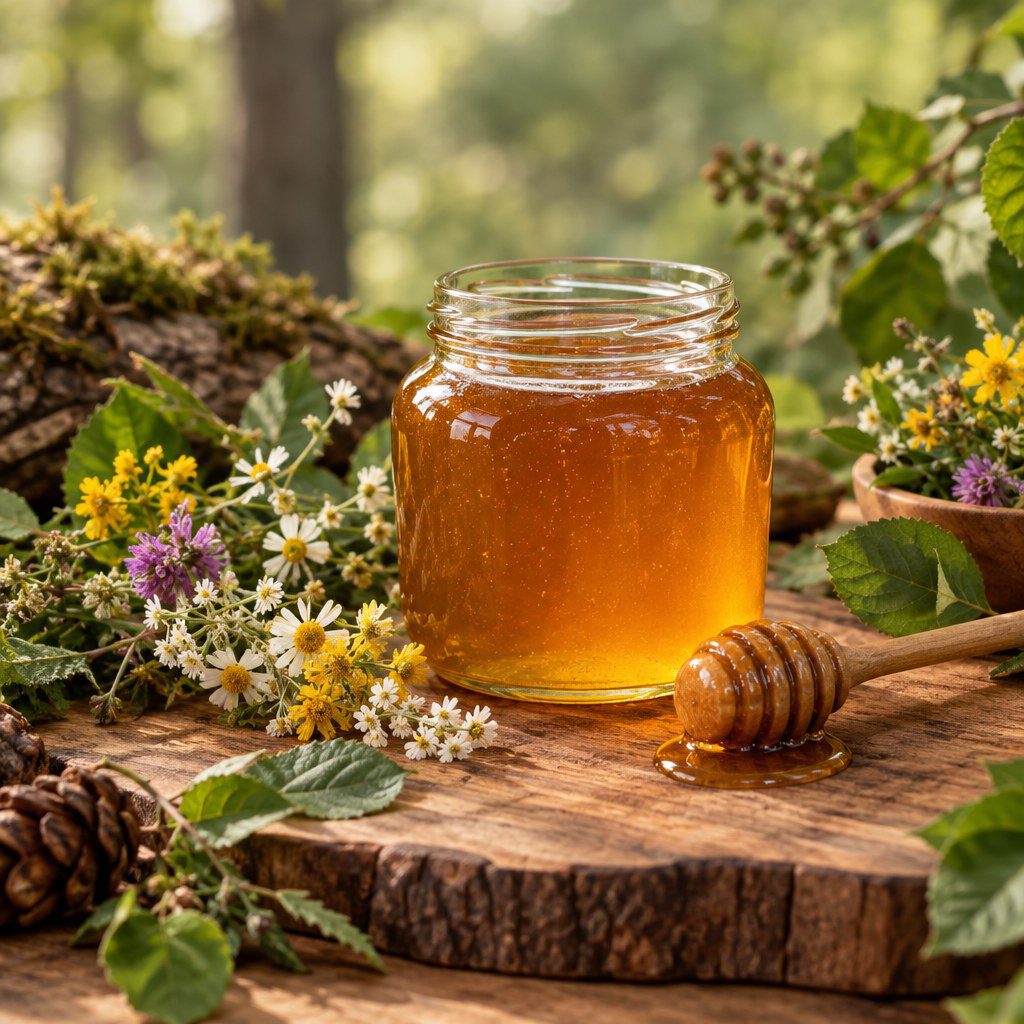
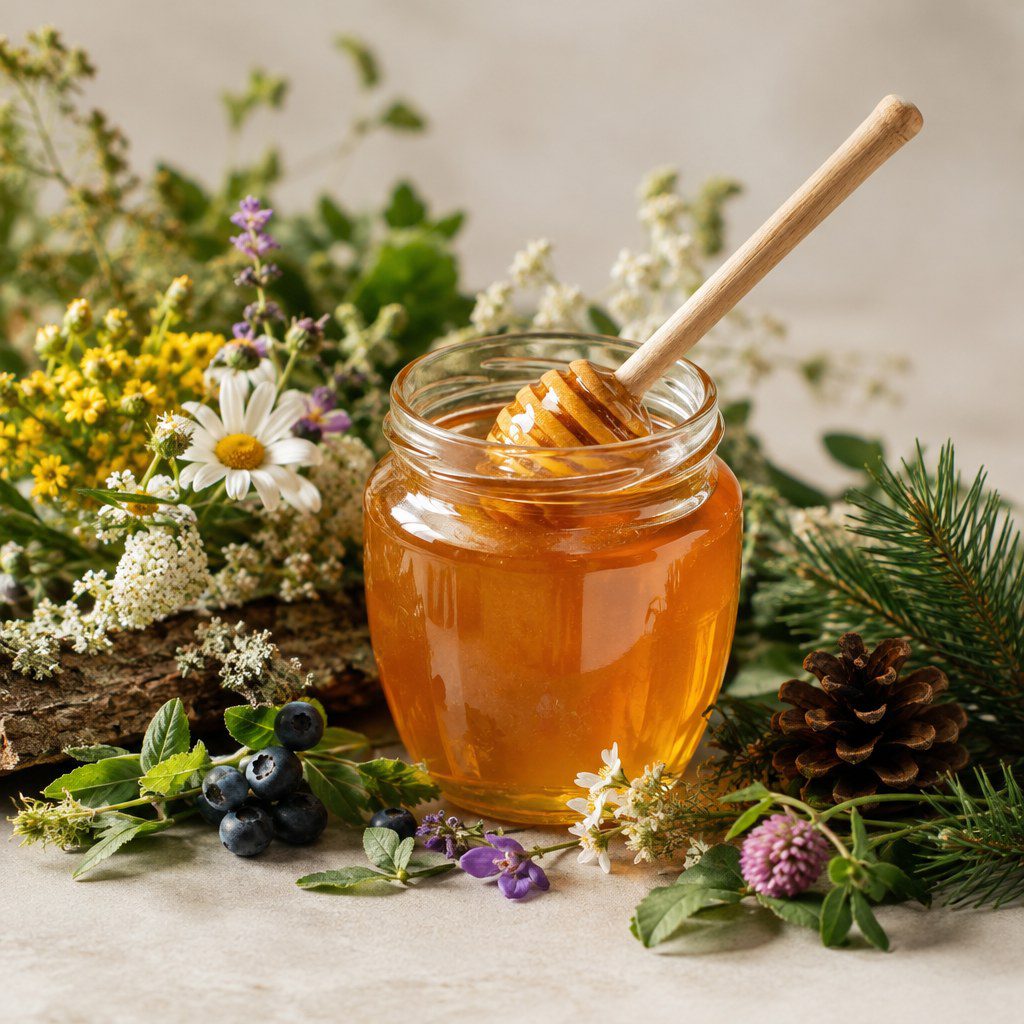
If you have seen jars labelled wild forest honey, you may wonder what makes them different from regular honey.
Is it a particular type of flower? Does “wild” automatically mean raw? Is darker forest honey always better?
Not necessarily.
Forest honey is interesting because bees may forage across a diverse natural environment rather than from one clearly dominant floral source. This can give the honey a distinctive colour, aroma and flavour.
Here is what buyers should understand before choosing wild forest honey.
What Is Wild Forest Honey?
The term wild forest honey is commonly used to describe honey associated with bees foraging among flowering plants, trees and vegetation in forest environments.
Unlike a single-flower honey, the nectar source may be more diverse.
- Colour
- Aroma
- Flavour
- Thickness
- Natural crystallisation
- Variation between batches
Because honey reflects its environment, two forest honeys do not necessarily look or taste exactly the same.
It is also important to understand that words such as wild, forest and raw describe different characteristics. A buyer should therefore read the actual product information rather than assuming one word explains everything about the honey.
What Does Wild Forest Honey Taste Like?
Forest honey is often chosen because of its more noticeable flavour.
- Rich
- Floral
- Earthy
- Deeply sweet
- Slightly woody or herbal
Some forest honeys can also be darker than lighter floral varieties. However, colour alone does not determine quality.
A pale honey is not automatically inferior, and a very dark honey is not automatically purer.
Why Can Forest Honey Taste Different From Batch to Batch?
Honey is an agricultural product. Bees forage according to what is flowering and available in their surroundings.
Season, weather, vegetation and geography can therefore affect the final honey.
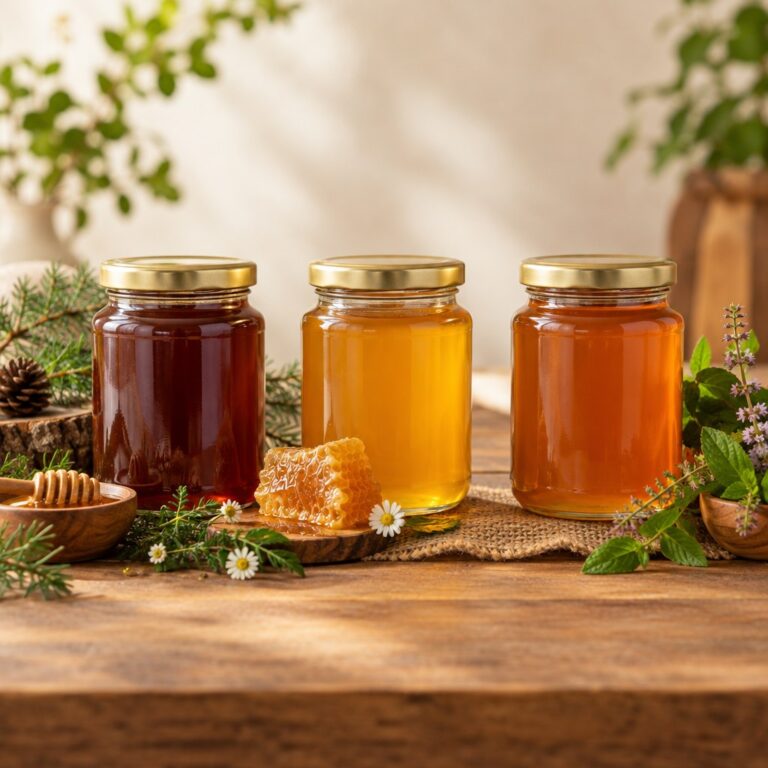
- Colour: from lighter amber to darker shades.
- Aroma: subtle in some batches and stronger in others.
- Flavour: different floral sources create different flavour profiles.
- Texture: honey may become thicker or crystallise at different rates.
Natural variation should not automatically be interpreted as inconsistency or poor quality.
Wild Forest Honey vs Regular Honey
There is no single definition of “regular honey,” because commercial honey can come from many different sources.
The practical difference is usually the source and flavour profile.
Wild forest honey may reflect nectar from diverse forest vegetation, while another honey may come primarily from agricultural or more identifiable floral sources.
Neither is automatically superior. The better choice depends on your taste preference, intended use, product sourcing, processing information and brand transparency.
Wild Forest Honey vs Raw Honey
These terms should not be treated as synonyms.
Forest honey describes where bees forage.
Raw honey generally relates to how the honey is processed.
So forest honey may also be described as raw if the product genuinely meets the manufacturer’s definition of limited processing.
For a deeper guide, read Raw Forest Honey: Benefits, Uses & What Makes It Different.
Wild Forest Honey vs Organic Honey
Forest and organic honey also describe different things.
Forest honey is associated primarily with source.
Organic honey relates to applicable organic production requirements.
That means the choice should not simply be “Which one is better?” Instead, consider which flavour you prefer, whether organic certification is important to you, what the individual product label says and how you plan to use the honey.
For a detailed comparison, read our Forest Honey vs Organic Honey guide.
How to Use Wild Forest Honey
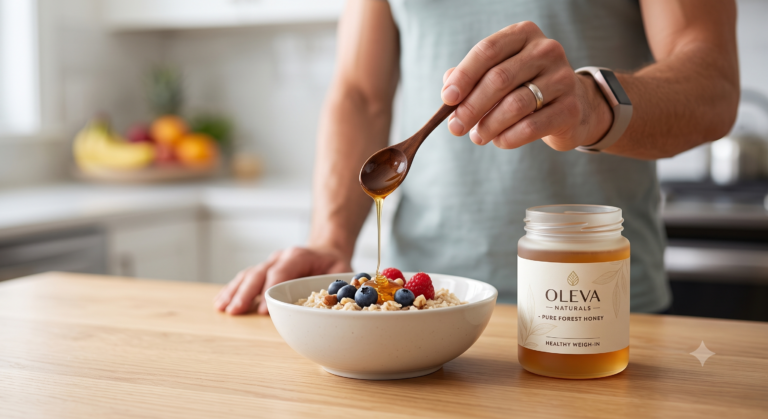
Forest honey’s stronger flavour can work especially well in foods where you want the taste of honey to remain noticeable.
1. Breakfast
- Toast
- Oats
- Yogurt
- Fruit
- Pancakes
2. Tea
Forest honey can complement herbal or regular tea when you want richer sweetness.
3. Smoothies
A small quantity can add sweetness without dominating the recipe.
4. Salad Dressings
Honey works well alongside mustard, lemon, vinegar and olive oil.
5. Marinades
Its sweetness can balance savoury, acidic or mildly spicy flavours.
6. Desserts
Use it as a drizzle over selected desserts or fruit. Honey contains naturally occurring sugars, so moderation remains appropriate.
Does Wild Forest Honey Crystallise?
It can. Crystallisation is a normal behaviour in many honey varieties.
- Natural sugar composition
- Temperature
- Floral sources
- Storage conditions
Crystallisation does not automatically mean the honey has spoiled. It also should not be treated as definitive proof of purity.
If you are interested in honey-authenticity claims, read How to Know If Honey Is Pure: 5 Common Home Tests Explained.
How to Choose Wild Forest Honey
When comparing products, use a practical checklist.
Check the ingredient information
Read what the label actually declares rather than relying solely on words such as “premium” or “natural.”
Check the source
Does the seller explain what is meant by forest honey and where the product comes from?
Review processing information
If the product is described as raw, look for information explaining how the honey is handled or processed.
Look for traceability
- Manufacturer details
- Batch information
- Date information
- Relevant regulatory information
Check the packaging
The jar should be properly sealed and labelled.
Avoid judging only by appearance
Dark colour, thickness or crystallisation alone cannot establish honey quality or purity.
Can You Test Wild Forest Honey at Home?
Home tests cannot reliably prove whether a honey has been adulterated.
- Water tests
- Thumb tests
- Flame tests
- Crystallisation tests
The way honey behaves can vary naturally due to moisture, temperature and botanical source. When authenticity needs to be scientifically assessed, suitable laboratory analysis is more meaningful than household tricks.
How Should Forest Honey Be Stored?
- Keep the jar tightly closed
- Store at room temperature
- Keep away from direct sunlight
- Keep moisture out of the container
Refrigeration is generally unnecessary. If crystallisation occurs, it does not automatically indicate spoilage.
Try Oleva Naturals Forest Honey
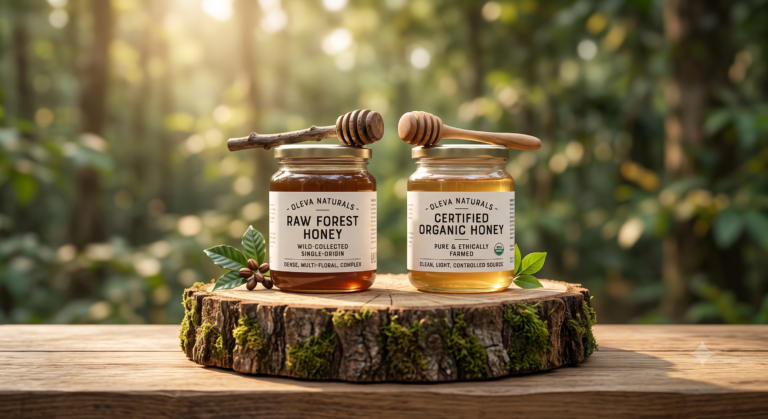
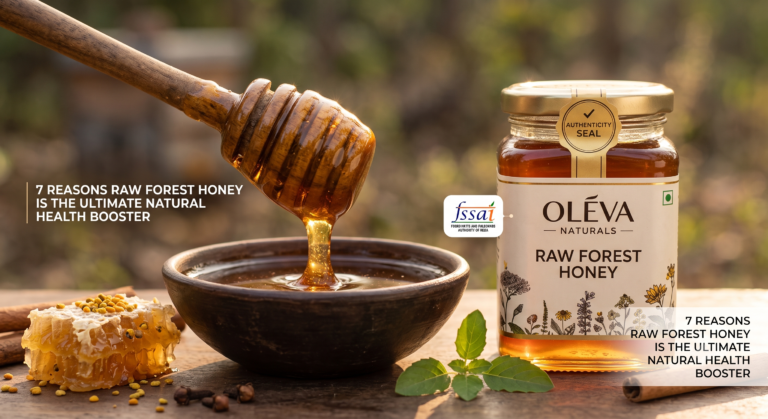
If you prefer honey with a richer flavour profile, you can explore Oleva Naturals Forest Raw Honey.
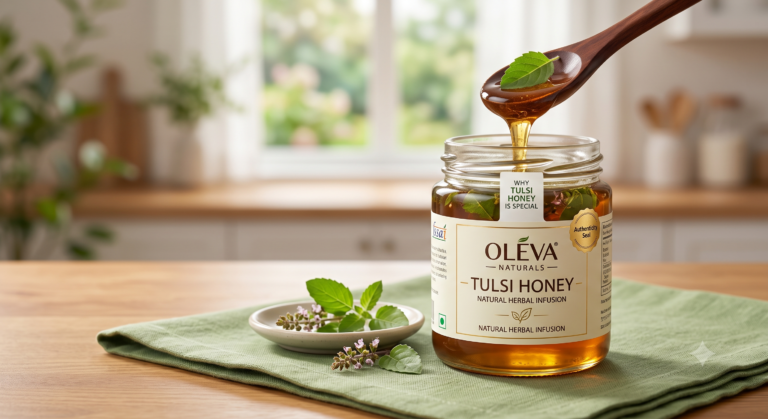
Oleva also offers Organic Honey and Tulsi Infused Honey.
Comparing the three by flavour, sourcing and intended use can help you decide which variety suits your household best.
Frequently Asked Questions
What is wild forest honey?
It commonly describes honey associated with bees foraging among diverse vegetation in forest environments.
Is wild forest honey the same as raw honey?
Not necessarily. Forest describes the source, while raw generally describes processing.
Is forest honey always dark?
No. Colour can vary according to botanical source and other natural factors.
Does wild forest honey crystallise?
It can. Crystallisation is a natural process in many honey varieties.
Is darker forest honey purer?
Not necessarily. Colour alone cannot determine purity.
How should I choose good forest honey?
Check ingredients, source information, processing details, packaging, traceability and the credibility of the brand’s claims.
Can I use forest honey every day?
It can be used as a sweetener in a normal diet in moderate amounts.
Final Thoughts
Wild forest honey is best appreciated for its source, flavour and natural variation, rather than exaggerated health claims.
When choosing a jar, look beyond colour and thickness. Review the product label, sourcing information, processing description and brand transparency.
And most importantly, choose the honey whose taste and intended use make sense for you.