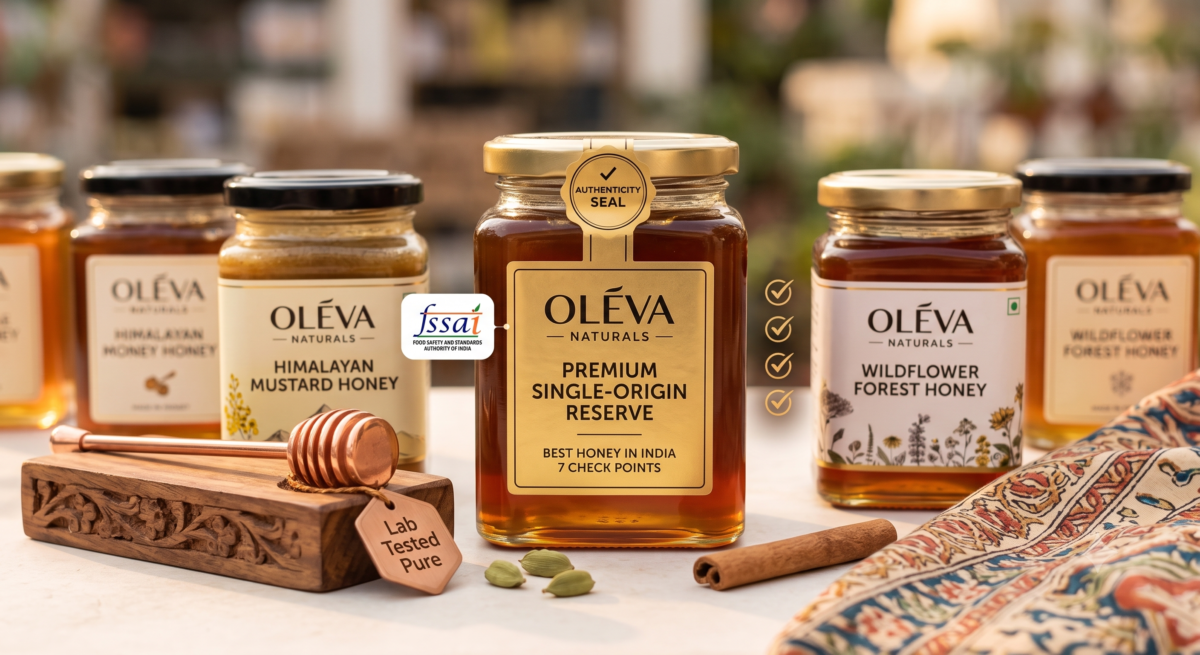
Finding the best honey in India is not simply about choosing the darkest jar, the thickest texture or the product with the biggest “pure” claim on the label.
Honey naturally varies according to floral source, region, processing and storage. A better buying decision comes from checking what the brand can actually tell you about the product.
Here are seven practical things to evaluate before you buy.
1. Read the Ingredient List
Start with the label. If you are buying plain honey, check exactly what ingredients are declared.
Also look at the complete packaging information rather than relying only on front-label claims such as “natural,” “premium” or “pure.”
2. Look for Clear Product Information
A trustworthy honey product should give buyers useful information about what they are purchasing.
- Product type
- Net quantity
- Manufacturer or marketer information
- Batch information
- Date information
- FSSAI details where applicable
- Storage instructions
Transparent labelling makes it easier to compare products intelligently.
3. Understand the Honey Source
Different honey varieties can have different flavour profiles.
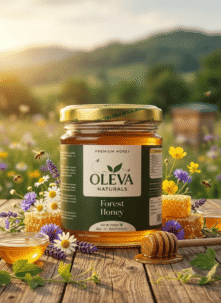
- Forest Honey: Often associated with diverse forest vegetation and a richer flavour.
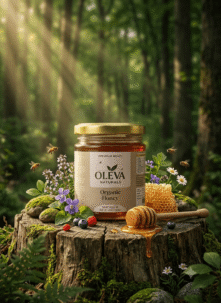
- Organic Honey: Associated with applicable organic production requirements and certification.
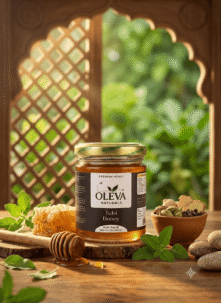
- Tulsi Honey: Combines honey sweetness with a distinctive tulsi flavour.
The right choice depends on your taste and intended use rather than one variety automatically being “best.”

4. Do Not Judge Honey Only by Colour or Thickness
Dark honey is not automatically purer than light honey. Likewise, very thick honey is not automatically superior.
- Floral source
- Temperature
- Natural sugar composition
- Moisture
- Storage conditions
Use the label and source information alongside appearance.
5. Understand Crystallisation
Honey may crystallise naturally. Some varieties crystallise quickly while others remain liquid longer.
Crystallisation by itself does not prove that a honey is fake, nor does it guarantee purity. It is simply one of the natural behaviours honey can display.
6. Do Not Rely on Viral Home Purity Tests
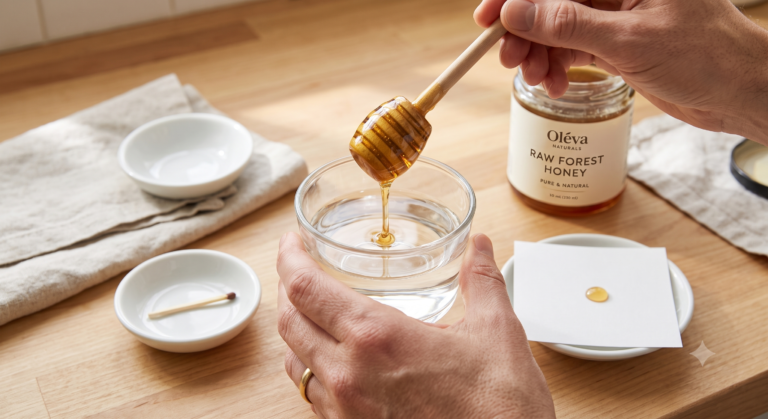
You may have seen tests such as dropping honey into water, putting honey on your thumb or trying a flame test. These demonstrations cannot reliably determine whether honey is pure or adulterated.
Honey behaviour can change because of moisture, temperature, floral source and natural composition. For dependable purity or adulteration assessment, laboratory analysis is considerably more reliable.
Read our detailed guide: How to Check Pure Honey at Home: 5 Common Tests Explained.
7. Choose a Brand That Communicates Clearly
Price alone does not determine honey quality.
- Clear ingredient information
- Product source information
- Proper packaging
- Consistent labelling
- Customer support
- Relevant compliance information
- Realistic product claims
Is Organic Honey Always Better?
Not necessarily. “Organic” relates to specific production standards. It does not automatically mean that every organic honey will taste better or be nutritionally superior to every other honey.
If organic sourcing matters to you, check the applicable certification information for that particular product. You can also read our Organic Honey Benefits, Uses & How to Choose Quality Honey guide.
Raw Honey vs Processed Honey
Raw honey generally refers to honey that has undergone limited processing. Other honey products may undergo filtration or heating for reasons such as consistency and shelf presentation.
Rather than assuming that one label automatically guarantees superior quality, check how the manufacturer describes the actual product.
How to Store Honey Properly
- Keep the lid tightly closed
- Store at room temperature
- Keep away from direct sunlight
- Avoid introducing moisture into the jar
Refrigeration is generally unnecessary.
Explore Oleva Naturals Honey
Compare flavour, sourcing information and intended use to decide which variety works best for you.
Frequently Asked Questions
How can I identify good honey?
Start with ingredients, source information, packaging, regulatory details and brand transparency rather than relying on home tests alone.
Does crystallisation mean honey is fake?
No. Honey can crystallise naturally.
Can home tests prove honey purity?
No. Home tests cannot reliably confirm purity or adulteration.
Is organic honey automatically better?
No. It describes a production standard rather than guaranteeing that a product is superior in every respect.
Can honey be used every day?
Honey can be used as a sweetener in moderate amounts as part of a normal diet.
2 Comments