Honey need not wait for toast or a bowl of oats. In a savoury pan, a small amount can bring sweetness to salty soy sauce, sharp lime and garlic. This honey-soy paneer recipe uses that combination as a light finishing sauce rather than a heavy coating.
Start with a small batch for two people, served alongside rice and vegetables. The quantities below are a starting point for your kitchen. Soy sauces differ in saltiness, limes differ in sharpness, and your preferred balance may be different from someone else’s.
Gather the ingredients
For the paneer and vegetables, set out:
- 200 g paneer, cut into bite-sized cubes
- 1 small capsicum, cut into pieces
- 2 teaspoons neutral cooking oil
- 1 small garlic clove, finely chopped
For the finishing sauce, mix:
- 2 teaspoons honey
- 2 teaspoons soy sauce
- 1 teaspoon lime juice
- 2 tablespoons water
Keep a little more water nearby for adjusting the pan. Black pepper or chilli flakes are optional. Leave extra salt until you have tasted the finished dish, because the soy sauce already brings saltiness.
Mix the sauce before heating the pan
Stir the honey, soy sauce, lime juice and water together in a small bowl. Mix until the honey is dispersed rather than sitting at the bottom. Having the sauce ready lets you concentrate on the paneer once cooking begins.
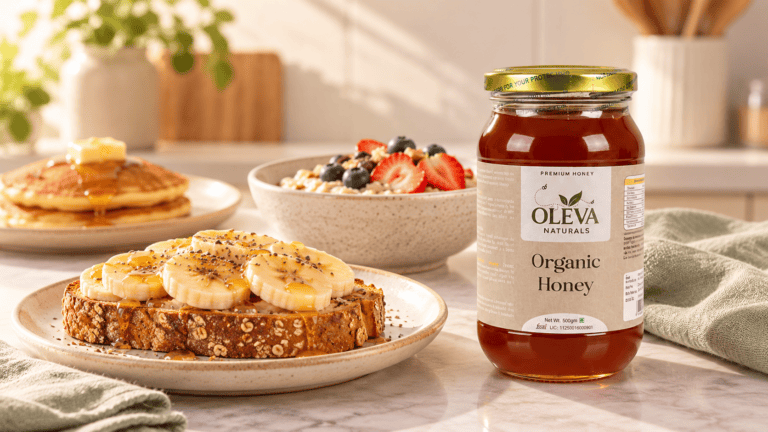
Oleva’s Organic Honey is one option to explore for this recipe. Use the honey you already enjoy; this is a cooking idea, not a reason to replace a jar that is already open.
Cook the vegetables and paneer
Warm the oil in a frying pan over medium heat. Add the capsicum and cook, stirring, until it reaches the texture you prefer. Add the paneer and turn the pieces gently so that some surfaces pick up colour. Avoid repeatedly pressing or breaking the cubes.
Add the garlic towards the end of this stage and stir briefly. If the pan is getting too hot or the garlic is colouring quickly, reduce the heat before continuing. The aim is a warm, savoury base for the sauce.
Add a light coating at the end
Lower the heat and pour in the prepared sauce. Toss gently until it lightly coats the paneer and capsicum. Do not chase a dark, sticky finish: if the sauce reduces too far, add a splash of water and loosen it.
Taste a coated piece before changing anything. Want a sharper finish? Add a few drops of lime. Prefer less intensity? Add a little water. Make one small adjustment at a time so that you can tell what changed.
Make the plate your own
Serve with rice and vegetables, keeping the sauce as an accent. You can also put the paneer into a roti with sliced cucumber for a different serving idea. Neither version needs extra honey drizzled over the top unless that is the taste you want.
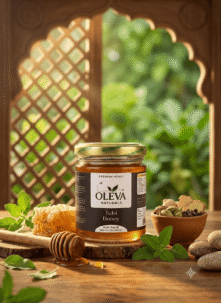
Curious about another jar? Read Oleva’s Forest Honey details, or explore Tulsi Infused Honey, which the product description identifies as honey combined with tulsi infusion. A change of honey can be a flavour experiment; it is not a promised improvement.
Have your rice, vegetables and plates ready before adding the finishing sauce. That way, you can serve when the coating is how you like it, rather than leaving the pan on the heat while preparing everything else. For a larger meal, consider cooking the paneer in batches so that you have space to turn the pieces comfortably. Keep the sauce separate until each batch is ready for its final toss.
Record the honey amount and any changes you enjoyed, then use that note next time. Check current product details and your chosen pack before ordering. Honey is not suitable for infants under 12 months; the CDC advises against giving them honey. This recipe is intended for adult meals.